Thursday, December 29, 2011

Derek Lovley Perspective article in Energy & Environmental Science

UMass Amherst researcher Derek Lovley recently had a Perspective article, "Live wires: direct extracellular electron exchange for bioenergy and the bioremediation of energy-related contamination," published in Energy and Environmental Science. He studies the genus Geobacter, microorganisms with the ability to directly transfer electrons outside the cell. This article is an overview of their potential roles in both the sustainable production of energy and the remediation of environmental pollution, as well as raising the idea of applications in "the emerging field of bioelectronics." From the article's Broader context sidebar:
Novel biological processes are a potential source of solutions for the need for new, sustainable energy strategies and the necessity of dealing with the legacy of environmental contamination associated with more traditional energy sources. The genomes of the microbial world encode a vast metabolic potential, which for the most part is poorly understood, but may provide some help for energy needs. This perspective gives a quick primer on the basic principles of direct extracellular electron transfer, a relatively recently discovered form of microbial respiration, and summarizes how continuing developments in the study of this one form of microbial respiration has led to a number of new concepts for bioenergy and the restoration of environments contaminated as the result of energy-related activities.

Friday, December 09, 2011

UMass, state plan world class ocean research lab in Gloucester


Article in the online Boston Globe - and UMass also has a video on YouTube about reopening this research station.


UMass Researcher Herb Hultin used to work at this station; the library sent many articles there before he passed away in 2007.

Congratulations to  Professor Molly Lutcavage  on her success!

Friday, September 23, 2011

Science on Screen @ Amherst Cinema - Jeff Podos on bird song, and Hitchcock's The Birds

Amherst Cinema's newest film series, Science on Screen, will feature a speaker on a science subject and a related film.  First up is UMass biology professor, Jeff Podos, and The Birds by Alfred Hitchcock.  See website for full details.

Wednesday, September 07, 2011

UMass Amherst Cold Spring Orchard - Belchertown

You can also buy fruit at the UMass Orchard in Belchertown, and buying the fruit there will support the orchard's operation.  Right now, they're selling peaches and plums.  Some varieties of apples for which they are most noted should be ready as well (site says "app. August 20").

I have never actually bought fruit there, but I'm hoping to go this autumn.  They are open 7 days, but only from 10-5.

Peach season! How about Nectarines?

Local peaches are ready! I was reminded of this through an email from CISA, Community Involved in Sustaining Agriculture, the folks who have the "Local Hero" campaign in the supermarkets.

If you're interested in buying or picking peaches, they list which of their members offer various kinds of produce, and you can enter your zip code to find farms near you.  This list is for peaches.

I actually prefer nectarines; sad to say there are many fewer outlets for this wonderful fruit.

You can also find out what kind of farm it is, whether they use pesticides or not, etc. If you're a localvore, you'll find this site very useful.

Sunday, September 04, 2011

Scientific Journal Article Retraction Rate Growing

On the Media, a public radio show, recently covered the increase in the rate that scientific journal articles are being retracted by interviewing Ivan Oransky. From their description of this interview:
There's often a really interesting story behind a retraction. That's what Ivan Oransky told us. He's a doctor and journalist and founder, along with Adam Marcus, of a blog called Retraction Watch. They monitor scientific journals and investigate why articles were retracted. They uncovered serious ethical breaches at a variety of journals. We asked Oransky to tell us about some of the stories he's covered this year.
Oransky discusses some of the reasons for the increase, including some anecdotes about the papers retracted, and the actions of some authors, editors, and publishers. Because, dismayingly, many retracted papers continue to be cited, he suggests changes in how these papers are marked in the scientific record to reflect the fact that they have been retracted.

Wednesday, August 10, 2011

Bacterial nanowires conduct like metals - nanotechweb.org post

UMass Amherst researcher Derek Lovley's work with Geobacter sulfurreducens published in Nature Nanotechnology doi:10.1038/nnano.2011.119.
Derek Lovley and colleagues of the University of Massachusetts at Amherst made their discovery in networks of “bacterial filaments”. These are also known as “microbial nanowires” because they conduct electrons along their length. These are produced naturally by some bacteria and are about 3-5 nm wide and up to tens of micrometres long. The filaments bind bacteria together into clumps called microbial biofilms.
To read the article in Nature Nanotechnology, copy the doi (digital object identifier) above, and paste it into the library's citation linker tool.

Friday, August 05, 2011

Integrity Guidelines Up for Public Review - post in The Scientist

From the online newsletter, The Scientist:
The National Science Foundation (NSF) released a draft summarizing its principles for scientific integrity and outlining new principles which it plans to implement at the end of the year, and has invited the public to chime in. 
The draft is available in the Federal Register online:

It asserts the intention of the NSF to support open and transparent processes in awarding of grants, media policy, and making the results of research available to the public.
From the draft:
SUMMARY: On March 9, 2009, President Obama issued a Memorandum for the Heads of 
Executive Departments and Agencies on Scientific Integrity. Shortly thereafter the Office of 
Science and Technology Policy (OSTP) led an interagency task group to develop an 
implementation strategy, and NSF was represented on the task group. On December 
17, 2010, the OSTP Director issued a Memorandum with implementation guidance (for copies 
of both memoranda, see: 
http://www.whitehouse.gov/administration/eop/ostp/library/scientificintegrity).
      NSF is fully committed to its efforts to ensure that our processes will advance the goals 
articulated in the Memoranda. This report summarizes NSF practices both current and planned 
to maintain and enhance scientific integrity across our S&E community. The report is 
organized according to the major headings and topics of the December 2010 OSTP Memorandum.

DATES: Comments on the report are welcome before September 6, 2011. 
Comments will be useful in shaping the agency's implementation. Please send comments to 
siip_comments@nsf.gov. All comments received before the close of the comment period will be 
available for public inspection, including any personally identifiable or confidential business 
information that is included. Because they will be made public, comments should not include 
any sensitive information.

FOR FURTHER INFORMATION CONTACT:
  siip_comments@nsf.gov.
Major headings of the draft report:
I. Foundations of Scientific Integrity In Government
II. Public Communications
III. Use of Federal Advisory Committees (FAC)
IV. Professional Development of Government Scientists and Engineers
V. Implementation

Tuesday, May 24, 2011

Lessons in discovery and democracy from fellow organisms

If I am reading her right, in "Channeling the Microbiome" a recent article in The Scientist, Sarah Greene suggests that horizontal gene transfer can be seen as an analogy to information sharing among scientists, and other human beings, and that we might learn from our micro-cousins.
An interview with developmental biologist Peter A. Lawrence of Cambridge University, entitled “The Heart of Research is Sick,” was recently published in the UK magazine Lab Times. Lawrence points out that at its core, science must be about the discovery process, which may not be selected for in a highly competitive environment that rewards the most aggressive individuals and tends to diminish the efforts of younger scientists and women.
In NPR (Morning Edition, May 24, 2011) piece on how bees select a site for a new hive  ("Nature's Secret: Why Honey Bees are Better Politicians than Humans") Robert Krulwich reveals a method of persuasion that causes individual bees to investigate the suitability of proposed sites that eventually leads to them picking the best site, essentially by consensus.
Each scout's dance tells the other bees how to fly to the site — this is done by "waggle dancing," a figure dance that gives bees directions. And if a bee really likes the site, she will dance her directions over and over and over, literally hundreds of times. That way, more and more of her sister scouts see the dance, know where to go, and can fly off and check for themselves.

If the site is ho-hum, the second wave of bees will do a ho-hum, say, 10-repetition dance. But if the site is spectacular — high off the ground, narrow opening, facing the right direction, lots of honey storage space inside — then they will give it a spectacular, say, 300-round dance, so more scouts will know where to go. If they like the site, pretty soon everybody is doing the same dance: Let's call it "The Elm Tree" dance.

This is how bees "vote;" they dance themselves into a consensus.
Sounds like fun, and an excellent model. One wonders why the purportedly most intelligent species finds it so difficult to make good decisions.


Thursday, April 14, 2011

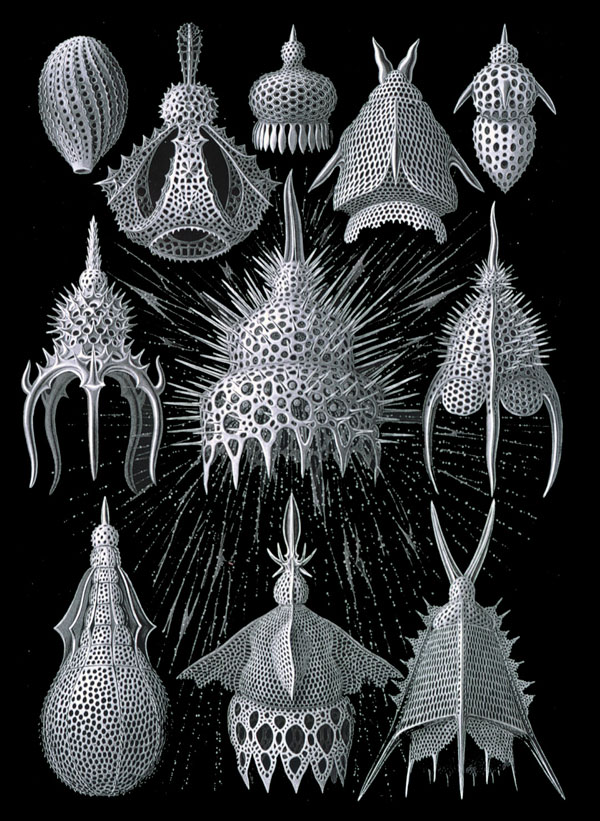
"Proteus" - film about Ernst Haeckel's work on radiolarians

Faculty of 1000's newsletter online (The Scientist) featured a documentary by David Lebrun on the life and work of Ernst Haeckel.  As it happens, I had written a post  back in July 2008 about Haeckel's book of drawings of radiolarians (Kunstformen der Natur) available online, which is why I recalled his name. There's a clip of Lebrun's documentary with the article - all animated with Haeckel's images - mind-boggling!

Wednesday, December 29, 2010

NSF mandate for Data Management Plans - help from the UMass Amherst Libraries

Beginning January 18, 2011, proposals submitted to the National Science Foundation must include a supplementary document of no more than two pages labeled “Data Management Plan”. This supplementary document should describe how the proposal will conform to NSF policy on the dissemination and sharing of research results.
To assist investigators, the National Science Foundation is providing FAQs and guidance documents from specific Directorates that address compliance. The entire policy, FAQ list, and links to Directorate information are available at http://www.nsf.gov/bfa/dias/policy/dmp.jsp. For full policy implementation, see the Grant Proposal Guide Chapter II.C.2.j.
Several federal and non-governmental funding agencies have their own set of requirements for data sharing. See for example, the University of Minnesota's list of funding agency data guidelines.

UMass Amherst Libraries: Data Working Group and Data Management Services

To help researchers meet the NSF’s requirements, the Data Working Group is coordinating the development of a number of services to help researchers analyze existing data management practices or create new practices that best fit the needs of their research projects.
Relevant services include:
  1. Guidance in the identification of appropriate data repositories for the archiving of large-scale data sets and associated research outputs, and assistance with material deposition.
  2. Consultation on metadata and standards for format and content of data, policies for data sharing and accessibility, and plans for long-term access and preservation of data sets.
  3. Provision of a globally accessible and widely indexed online location for faculty’s research outputs, including persistent URLs and searchable metadata, through ScholarWorks, the University's Institutional Repository.
This list of services will expand as the work of the Data Working Group and the Digital Strategies Group continues.
More information is available on the Library website under Services for Faculty:
http://www.library.umass.edu/services/services-for-faculty/data-management/

Article worth reading from Aug 2010: I Hate Your Paper - The Scientist - Magazine of the Life Sciences - by Jef Akst

Thought-provoking commentary on the problems of the peer-review system due to bias or other (un)professional conduct, and the state of science and science funding. Lively comments from readers after the article are also worth reading - peer-review is fine on the whole; there are not too few, but too many papers published; that the fault lies with the editors, publishers, etc. Peer-review is changing now; I am interested to see how this plays out in this brave new world we have created.

I will likely reference this article when I talk to students about peer-review in library sessions.

I Hate Your Paper - The Scientist - Magazine of the Life Sciences -
Many say the peer review system is broken. Here’s how some journals are trying to fix it.

Wednesday, October 27, 2010

Rising Above the Gathering Storm, Revisited: Rapidly Approaching Category 5 - report on the State of Science in the U.S.

This report was prepared for the Presidents of the National Academy of Sciences, National Academy of Engineering, and Institute of Medicine. From the website:
In the face of so many daunting near-term challenges, U.S. government and industry are letting the crucial strategic issues of U.S. competitiveness slip below the surface. Five years ago, the National Academies prepared Rising Above the Gathering Storm, a book that cautioned: "Without a renewed effort to bolster the foundations of our competitiveness, we can expect to lose our privileged position." Since that time we find ourselves in a country where much has changed--and a great deal has not changed.
So where does America stand relative to its position of five years ago when the Gathering Storm book was prepared? The unanimous view of the authors is that our nation's outlook has worsened. The present volume, Rising Above the Gathering Storm, Revisited, explores the tipping point America now faces. Addressing America's competitiveness challenge will require many years if not decades; however, the requisite federal funding of much of that effort is about to terminate.
Rising Above the Gathering Storm, Revisited provides a snapshot of the work of the government and the private sector in the past five years, analyzing how the original recommendations have or have not been acted upon, what consequences this may have on future competitiveness, and priorities going forward. In addition, readers will find a series of thought- and discussion-provoking factoids--many of them alarming--about the state of science and innovation in America.
Rising Above the Gathering Storm, Revisited is a wake-up call. To reverse the foreboding outlook will require a sustained commitment by both individual citizens and government officials--at all levels. This book, together with the original Gathering Storm volume, provides the roadmap to meet that goal. While this book is essential for policy makers, anyone concerned with the future of innovation, competitiveness, and the standard of living in the United States will find this book an ideal tool for engaging their government representatives, peers, and community about this momentous issue.
Available free online - linked above from the title of this blog post.

Monday, October 04, 2010

NSF Data Management Plans - language is out!

The National Science Foundation had said back in May of this year that Data Management Plans will be required in future grant applications, and that they would elaborate on this in October.

Academic librarians have been wondering if developing these plans might cause researchers to consult us about developing quality metadata for their data.  Ideally, thought should be given in advance of data collection to how research might be used in the future, by the researchers themselves, and by others, maybe even in other fields; tagging the data at its inception is most efficient. Looks like baby steps at the beginning, though.

Link to the NSF page where the language on Data Management Plans is published:
   http://www.nsf.gov/pubs/policydocs/pappguide/nsf11001/gpg_2.jsp#IIC2j

Specific language for various units within NSF (Directorate, Office, Division, Program, etc.) is here:
   http://www.nsf.gov/bfa/dias/policy/dmp.jsp.

On that page is a link to an FAQ about Data Management Plans:
   http://www.nsf.gov/bfa/dias/policy/dmpfaqs.jsp 
For an example, here is Frequently Asked Question #3:
3. Am I required to deposit my data in a public database?
What constitutes reasonable data management and access will be determined by the community of interest through the process of peer review and program management. In many cases, these standards already exist, but are likely to evolve as new technologies and resources become available.


We're all in a brave new world.  If you are a UMass Amherst person and are interested in speaking with a librarian about how the Library might be able to work with you on a Data Management Plan, please get in touch!

Friday, October 01, 2010

Academy Rankings Tell You a Lot, But Not Who's No. 1 in Any Field

Jeffrey Mervis
Science 1 October 2010: 18-19. 

This week's release of the long-awaited assessment of the quality of U.S. research doctoral programs by the National Academies' National Research Council will disappoint those who simply want to know who's No. 1 in any particular field, because the NRC assessment can look quite different depending on your definition of "best." 
 This National Academies' NRC study was discussed in a recent meeting I attended of the UMass Amherst Faculty Senate's council which is the liaison to the University's Development Office.  Rankings of this kind are always of interest to University administrations, naturally. Everyone speaking about it acknowledged that the 'rankings' are problematic in a number of ways.  One member commented that the people doing the ranking wouldn't have first-hand knowledge of the  departments they were judging among - it's a matter of reputation, apparently, rather than anything based on real data. That said, people will make use of the numbers in whatever way will benefit their agenda.  From the article in Science:
To be sure, NRC does rank programs—but oh so carefully. Instead of assigning a single score to each program in a particular field, the assessment ranks the program on five different scales. Each score is also presented as a range of rankings reflecting the 5th and 95th percentiles of the scores it received. The scales themselves are based on 20 characteristics (see table, p. 19) that the NRC panel deemed appropriate for a quantitative assessment. Two are supposed to portray the overall quality of the program—one derived from a reputational survey (the R scale), the other from a quantitative analysis (the S scale). Three others rely on subsets that address important dimensions of quality: research activity, student support and outcomes, and diversity. The report itself highlights the uncertainties generated by such an exercise by calling the results "illustrative rankings [that] are neither endorsed nor recommended by the NRC as an authoritative conclusion about the relative quality of doctoral programs."
 The report's Excel spreadsheets are available at www.PhDs.org or www.nap.edu/rdp.

News article from Nature: "Emperor penguin's old clothes are unveiled"

Fossilized feathers reveal colourful past.

A 36-million-year-old fossilized penguin skeleton found on a cliff-face in Peru has given scientists insight into how penguin feathers, originally used for flight, adapted to swimming. The fossil, found by palaeontology student Ali Altamirano of the Museum of Natural History in Lima, contained intact pigments which researchers say mean that, instead of the black and white plumage of modern-day penguins, the ancient bird sported grey and reddish-brown feathers.
Image caption: The fossilised remains of a giant penguin reveals the birds were not always black and white. - Katie Browne, U.T. Austin
... [article continues - click on title to go to the original article]

Wednesday, September 08, 2010

Changes at the Sciences & Engineering Library (@SEL) - Fall 2010 - elevators, shelves, and names - oh my!

We've been busy this summer.

Because the campus Facilities Planning is upgrading the electrical system in our building, we lost a little space on every floor, and about half the Library's basement. We installed motorized compact shelving in the remaining basement space to maximize the storage capacity there; that propelled our decision to rearrange our collections to take the best advantage of this change. In short:
  • All circulating books - 3rd floor
  • All bound journals - 1st floor & Basement
Here's our current floor directory
 
Unfortunately, due to bureaucratic issues, we are not allowed to use the basement yet. Thus, the journals shelved there are unavailable to us until the Amherst Fire Department signs off on the room. Articles from those journals can be requested through Interlibrary Loan.

Also, the long-awaited elevator replacement project has begun.  The north elevator in the Lederle Low Rise was replaced over the summer. They are now working (intermittently) on the one in SEL. Until they are done, we must use the elevator at the north end outside the Library to move books from floor to floor (for reshelving, e.g.).  If you need to get from floor to floor in the Library, and have limited mobility, please let us know and we can assist.

Finally, we have amended the name of the Library, dropping "Integrated" because it doesn't mean anything now, and because it caused confusion for our patrons, who have been known to go by mistake to the new Integrated Sciences Building instead of Lederle to reach us.  This required a lot of website editing, and I'm not convinced we found them all, so if you find "Integrated Sciences and Engineering Library" on our website, please let us know! I also changed the name of the blog - since we are now acronym-ized as SEL, we are blogging as @SEL.  Hope you like the change.